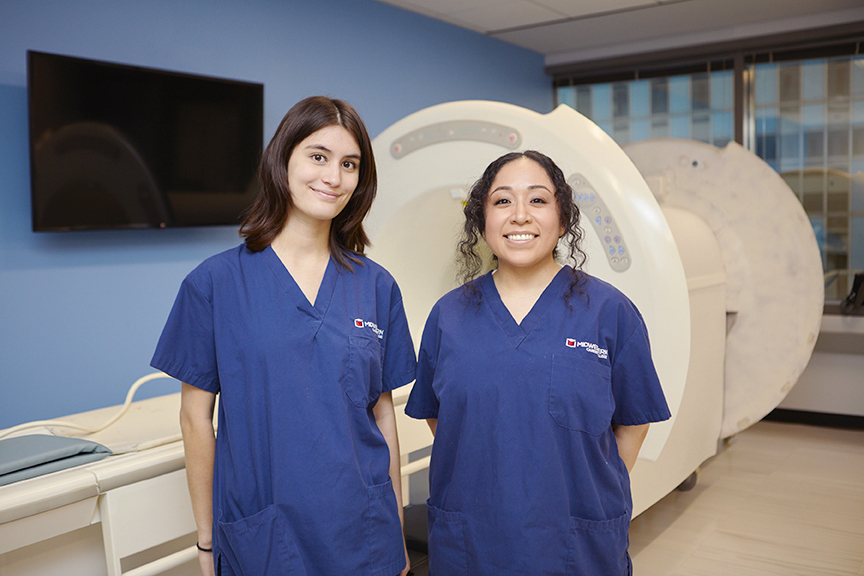
MCC students in the MRI lab at Midwestern Career College. Photo: MCC.
Choose Your Allied Health Career Path
Explore allied health programs at Midwestern Career College. Train for hands-on healthcare careers in diagnostic imaging, patient care, and clinical support. Programs range from short-term certificates to associate degrees, with pathways into hospitals, clinics, and specialized medical environments.
This example from our AAS in Non-Invasive Cardiovascular Sonography program shows students training with real diagnostic equipment—one of many hands-on pathways available across allied health programs at Midwestern Career College.
Non-Invasive Cardiovascular Sonography: Training with Real Diagnostic Equipment
Students in the Non-Invasive Cardiovascular Sonography (NICVS) program learn to perform ultrasound imaging of the heart and vascular system, developing the technical precision and clinical awareness required in diagnostic healthcare environments.
Choosing a healthcare career path depends on how you want to work with patients and technology. Some programs focus on imaging and diagnostics, such as MRI or sonography, where you operate advanced equipment. Others focus on direct patient care, such as medical assisting or phlebotomy. Technical roles like surgical technology and sterile processing support clinical teams behind the scenes.
If you are unsure where to start, consider whether you prefer hands-on patient interaction, working with medical technology, or supporting clinical procedures in fast-paced environments.
Frequently Asked Questions
How long does it take to complete an allied health program? Program length varies depending on the credential, ranging from short-term certificate programs to associate degree programs that typically take around two years.
What careers can I pursue with allied health training? Graduates work in hospitals, clinics, diagnostic imaging centers, and specialized medical facilities in roles such as MRI technologist, medical assistant, surgical technologist, and more.
Do I need prior healthcare experience? Most allied health programs are designed for students entering the field and include both classroom instruction and hands-on training.
Not sure which path fits your goals? Our admissions team can help you explore your options.