
MCC Partners Can Now Earn CME Credits While Mentoring the Next Generation of Sonographers
October 2026. Midwestern Career College (MCC) is introducing a new benefit for clinical partners supporting students in its AAS in Diagnostic Medical Sonography (DMS) program: eligible clinical preceptors may now earn up to 6 continuing medical education (CME) credits per calendar year through qualifying student clinical instruction.
Clinical partnerships are essential to preparing the next generation of diagnostic medical sonographers. By providing hands-on learning opportunities in healthcare environments, clinical partners help students apply classroom knowledge, develop practical skills, and prepare for professional practice. Because MCC’s program is approved by CAAHEP, preceptors can now earn CME credits for their work with MCC DMS students during clinical externship.
This CME opportunity recognizes the time and expertise clinical preceptors contribute to student education while providing eligible professionals with another way to support their own continuing education.
What Is a Clinical Preceptor?
A clinical preceptor is an experienced professional at a clinical site who observes, guides, and supports a student during clinical education. During this experience, MCC DMS students apply the knowledge and skills developed in the classroom to clinical situations under appropriate supervision.
Preceptors help students become familiar with the responsibilities of working in a diagnostic medical sonography setting. Their guidance may include demonstrating clinical techniques, observing student performance, reinforcing appropriate procedures, and helping students understand how to communicate with patients and other healthcare professionals.
Through this mentorship, students can strengthen their technical abilities, build confidence, and develop professional habits related to patient-centered care, safety, and image quality. Preceptors therefore play an important role in connecting academic instruction with the expectations of clinical practice.
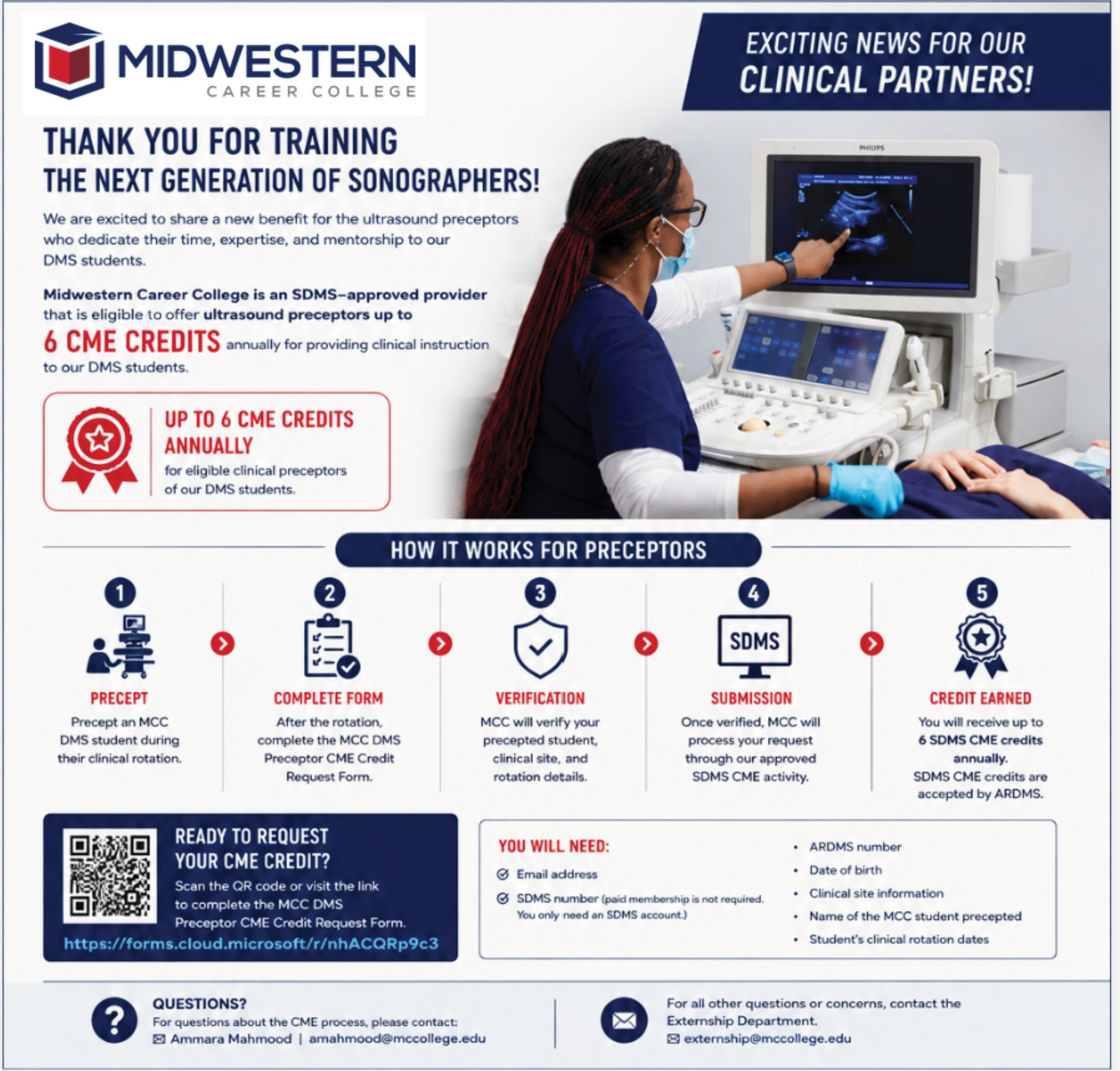
How Can Clinical Preceptors Earn CME Credits Through MCC?
The Society of Diagnostic Medical Sonography (SDMS) allows CAAHEP-accredited sonography programs to award affiliated clinical instructors up to 6 CME credits per clinical instructor per calendar year for qualifying student instruction.
Midwestern Career College’s AAS in Diagnostic Medical Sonography – Abdomen Extended is accredited by the Commission on Accreditation of Allied Health Education Programs (CAAHEP) upon the recommendation of the Joint Review Committee on Education in Diagnostic Medical Sonography (JRC-DMS).
Through this framework, eligible MCC clinical preceptors may qualify for CME credit for their participation in student clinical education. Eligibility, documentation, and submission requirements must follow the applicable MCC and SDMS processes.
Clinical preceptors should confirm current requirements with MCC before submitting or relying on preceptorship activity for CME credit.
Ready to Request Your CME Credit?
Eligible MCC Diagnostic Medical Sonography preceptors can use the MCC DMS Preceptor CME Credit Request form to submit their information for review.
Why CME Credits Matter for ARDMS-Credentialed Sonographers
For professionals who hold credentials through the American Registry for Diagnostic Medical Sonography (ARDMS), continuing medical education is part of maintaining active credentials.
ARDMS requires credential holders to attest to earning 30 ARDMS-accepted CME credits within their designated three-year CME period. For eligible clinical instructors, earning up to 6 CME credits through qualifying student preceptorship can contribute toward that continuing education requirement.
Beyond the credits themselves, mentoring students can give experienced sonographers opportunities to reflect on clinical practices, explain complex concepts, and share knowledge developed throughout their careers. These interactions can reinforce the importance of patient safety, effective communication, professional standards, and quality imaging.
CME eligibility and acceptance remain subject to the applicable professional requirements, but the clinical instructorship pathway can connect educational mentorship with professional development.
How CAAHEP Accreditation Connects to Clinical Education
CAAHEP provides programmatic accreditation for educational programs that meet established standards for preparing students in allied health professions. MCC’s AAS in Diagnostic Medical Sonography – Abdomen Extended earned CAAHEP Initial Accreditation effective July 15, 2026.
For DMS students, clinical education is an important part of professional preparation. Classroom and laboratory instruction establish foundations in sonography principles, anatomy, imaging procedures, equipment operation, and patient care, while supervised clinical experiences allow students to apply those skills in healthcare settings.
MCC’s clinical partners help connect these parts of the educational experience. By guiding students through practical clinical encounters, preceptors provide insight into healthcare workflows, professional responsibilities, patient interactions, and the day-to-day practice of diagnostic medical sonography.
The ability of CAAHEP-accredited programs to award qualifying clinical instructors CME credit creates an additional connection between accredited sonography education, clinical partnerships, and professional development.
“Our clinical partners play an essential role in preparing the next generation of diagnostic medical sonographers. Through their mentorship, students gain valuable hands-on experience, strengthen their clinical skills, and learn to deliver quality, patient-centered care.
We’re pleased to introduce this opportunity for eligible preceptors to earn up to 6 CME credits in recognition of their contributions to student education. We hope this benefit further demonstrates our appreciation for their expertise and commitment while supporting their continued professional development.
At MCC, we value these partnerships and the important role they play in shaping the future of sonography.”
— Ammara Mahmood
Associate Director of Clinical Coordination and Compliance
Midwestern Career College
Benefits for Clinical Partners and Future Sonographers
Clinical preceptorship creates value for both the professionals who share their expertise and the students developing their skills.
- Support continuing education goals: Eligible clinical instructors may earn up to 6 CME credits per calendar year through qualifying student instruction.
- Contribute to student development: Help students strengthen practical skills, professional confidence, and their understanding of sonography practice.
- Share clinical expertise: Pass on knowledge related to imaging procedures, patient care, clinical workflow, and professional expectations.
- Strengthen clinical partnerships: Help connect academic instruction with hands-on healthcare experience.
- Encourage professional reflection: Teaching and mentorship can provide opportunities to reinforce clinical knowledge and professional practices.
These benefits support a shared goal: preparing students for professional responsibilities while recognizing the experienced professionals who contribute to their development.
Recognizing the Professionals Who Make Clinical Education Possible
High-quality clinical education depends on the time, expertise, and commitment of clinical partners. Preceptors help students move beyond theoretical knowledge by demonstrating how sonography skills are applied in healthcare environments.
Their guidance helps students understand patient communication, professional conduct, image acquisition, safety, and teamwork. Through observation, feedback, and mentorship, clinical preceptors contribute directly to the development of future sonographers.
The opportunity for eligible preceptors to earn up to 6 CME credits per calendar year provides another way to recognize those contributions while connecting clinical instruction with continuing professional education.
MCC values the clinical partners who share a commitment to student learning and quality patient care. Their expertise helps bridge the distance between classroom preparation and professional practice and plays an important role in the education of the next generation of diagnostic medical sonographers.
Learn More About Diagnostic Medical Sonography at MCC
Midwestern Career College’s CAAHEP-accredited AAS in Diagnostic Medical Sonography combines classroom, laboratory, and clinical education to prepare students with the knowledge, technical skills, and professional experience needed for entry-level opportunities in diagnostic medical sonography.
References
This article was developed using guidance and information from the following professional and accrediting organizations:
- Society of Diagnostic Medical Sonography (SDMS) — CME and Clinical Instructorship FAQs
- Society of Diagnostic Medical Sonography (SDMS) — CME Provider Information
- American Registry for Diagnostic Medical Sonography (ARDMS)
- Commission on Accreditation of Allied Health Education Programs (CAAHEP)
About the Author
Arthur Bagdasaryan is Content Creation & Editorial Specialist at Midwestern Career College. He develops informative, accessible content designed to help readers better understand career-focused education, healthcare topics, and the professional landscape.